There's a sequence in yoga that has been practiced for thousands of years, and chances are you've moved through some version of it before. Maybe in your first yoga class, maybe on a YouTube video at 7 a.m. before the house woke up. Sun salutations, or Surya Namaskar in Sanskrit, have a way of meeting you wherever you are.
They may look simple, but they are deceptively complete.
What Is a Sun Salutation?
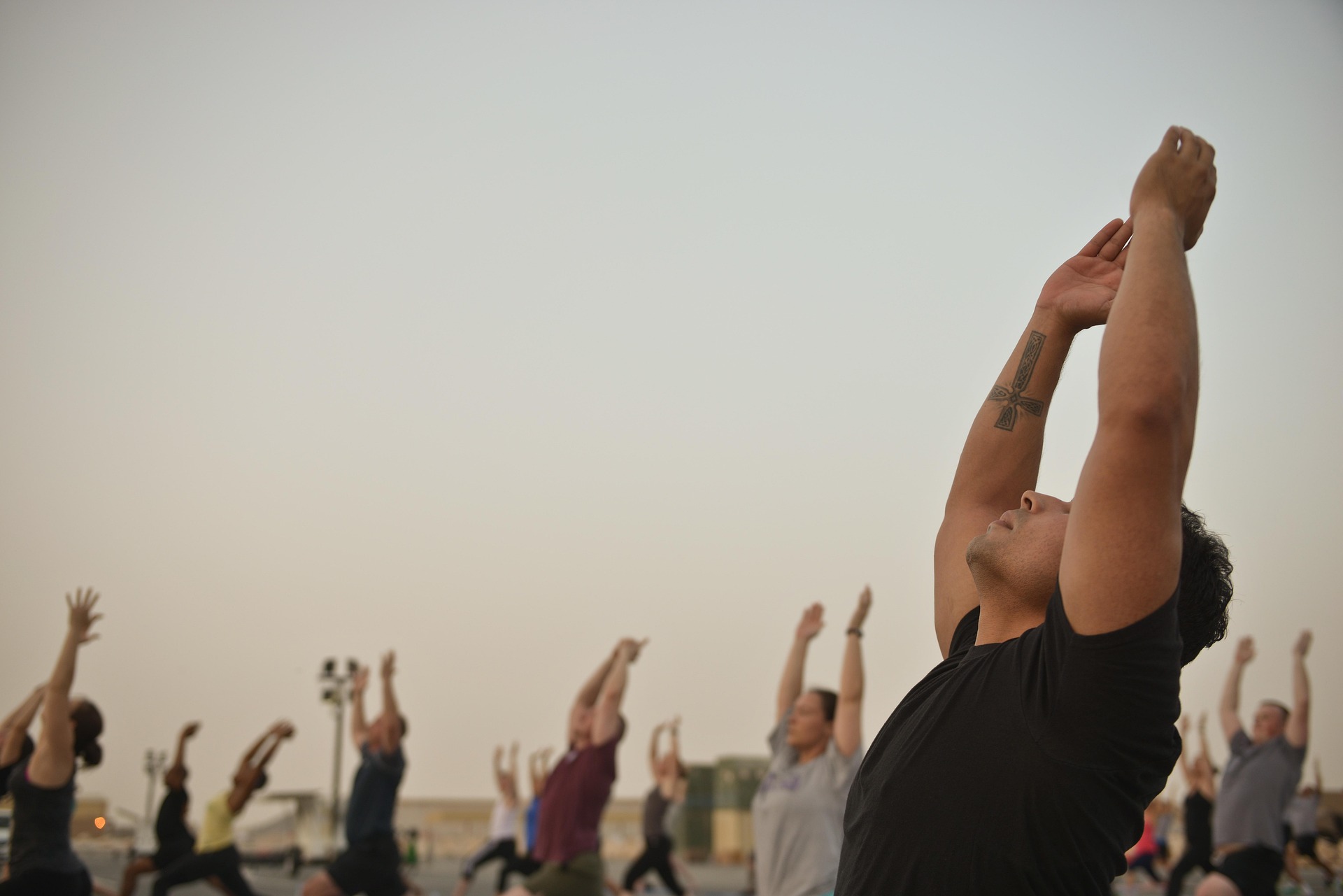
A sun salutation is a flowing sequence of yoga postures (typically 12 movements) linked by breath. You move from standing into a forward fold, step or flow into a low push-up, open the chest into upward dog, press back into downward dog, and return to standing. Each movement is linked to an inhale or exhale, so the breath and body move as one.
The practice has ancient roots in India, where morning salutations to the sun were a form of prayer and physical preparation for the day. The version most commonly practiced in modern yoga studios draws from the Ashtanga Vinyasa tradition formalized in the early 20th century. But the story behind it is far older: greet the day, wake the body, clear the mind.
The Physical Benefits
Don't let the fluidity fool you. A sun salutation is a full-body practice in disguise, and for people in their 30s, 40s, 50s, and beyond, it addresses exactly the things that start to matter most.
Strength That Actually Transfers
The older we get the more we care about functional strength. Not how much we can lift, but whether we can carry groceries, get up from the floor, and move through daily life without pain. Sun salutations build the kind of strength that transfers: core stability from holding plank, shoulder and upper back strength from moving through chaturanga and upward dog, and leg strength from the lunges and standing poses woven into the sequence. None of it requires equipment, a gym, or a body that has been training for years.
Mobility You'll Feel the Next Morning
Stiffness has a way of quietly accumulating in the hips, the low back, and the shoulders until one day you notice that getting out of bed takes a moment longer than it used to. Sun salutations move the spine in every direction it's designed to go: forward, back, and long. They open the hips and hamstrings gradually, without forcing. Regular practice won't just address existing tightness, it will also help prevent the slow creep of restricted movement that most people write off as inevitable.
For anyone whose flexibility has declined over the years, a gentle sun salutation practice is one of the most effective (and forgiving) ways back.
Cardio That Doesn't Punish Your Joints
Running and high-impact exercise are hard on knees and hips, especially as we age. Sun salutations, practiced at a steady flowing pace, raise the heart rate into the moderate aerobic range without any of the impact. Your heart is working, your breath is moving, but your joints are supported and the rhythm is yours to control. If traditional cardio has started to feel like something your body argues with, this is worth trying.
The Mental Benefits: Sun Salutations as Moving Meditation
Here is something that often surprises people new to the practice: when sun salutations are done with intention they become a form of meditation.
Each movement is anchored to a breath. Inhale, reach up. Exhale, fold forward. When you follow that rhythm and let the breath lead the body, the mind has something specific to follow. It quiets. Not because you forced it to, but because it has a job to do.
This is what's sometimes called moving meditation or kinesthetic mindfulness: using the body's movement as the object of attention, the way a seated meditation uses the breath. And the effects go deeper than relaxation. Yoga's breath-synchronized movement helps to regulate the autonomic nervous system, shifting the body out of the stress response and into a state of greater calm and balance. Regular yoga practice has also been linked to measurable improvements in depression, anxiety, PTSD, and other conditions rooted in chronic stress. The common element is the breath itself: slow, deliberate breathing activates the parasympathetic nervous system in ways that medication and talk therapy alone often can't reach.
For many people, this is the entry point. Sitting still and watching the breath can feel impossible when the mind is busy. But give the body something to do (a sequence to follow, a breath to match), and stillness becomes accessible through movement.
What Stress Research Tells Us
Studies on yoga more broadly have shown consistent reductions in cortisol (the primary stress hormone) following regular practice. Research through the NIH shows that yoga provides a significant decrease in perceived stress across a range of populations, including those with anxiety, depression, and chronic pain. Sun salutations, practiced with breath awareness, are a concentrated version of this effect.
Who Is This For?
Everyone. Not just the experienced yogi who can touch their palms flat to the floor. Not just the person who has been practicing for years. Sun salutations are scalable: knees can come to the floor in low push-up, forward folds can be gentle. And every pose has a version that works for the body that shows up today, not the body you think you should have.
At Four Pebbles, we think about sun salutations as a practice of freshness, one of the four qualities at the heart of what we do here. Every time you step onto the mat and move through this sequence, you're shaking off the weight of the day and remembering that the body is alive and capable, even when the mind has forgotten. You don't have to be graceful, you just have to move.
And that quiet that settles in after a few rounds? That's real. That's the still water quality: the mind clearing, reflecting things as they truly are, without the noise.
If you've never tried sun salutations, or if you've been away from the mat for a while, we'd love to welcome you back. Come move with us.